By Carmen Villa Chávez, GFN fellow and Latin America and Caribbean network liaison
What happens when leadership is experienced not from the top down, but side by side with communities — listening, learning and co-creating solutions rooted in the realities of everyday life?
This is exactly what the W.K. Kellogg Foundation’s Global Fellows Network (GFN) has been exploring through Cazumbada 2025, an immersive learning experience held in the Baixada Maranhense Maranhão, Brazil.
Since 2023, GFN members and staff have participated in Cazumbada each fall to experience a groundbreaking view of leadership, and the event has since grown both in size and impact.
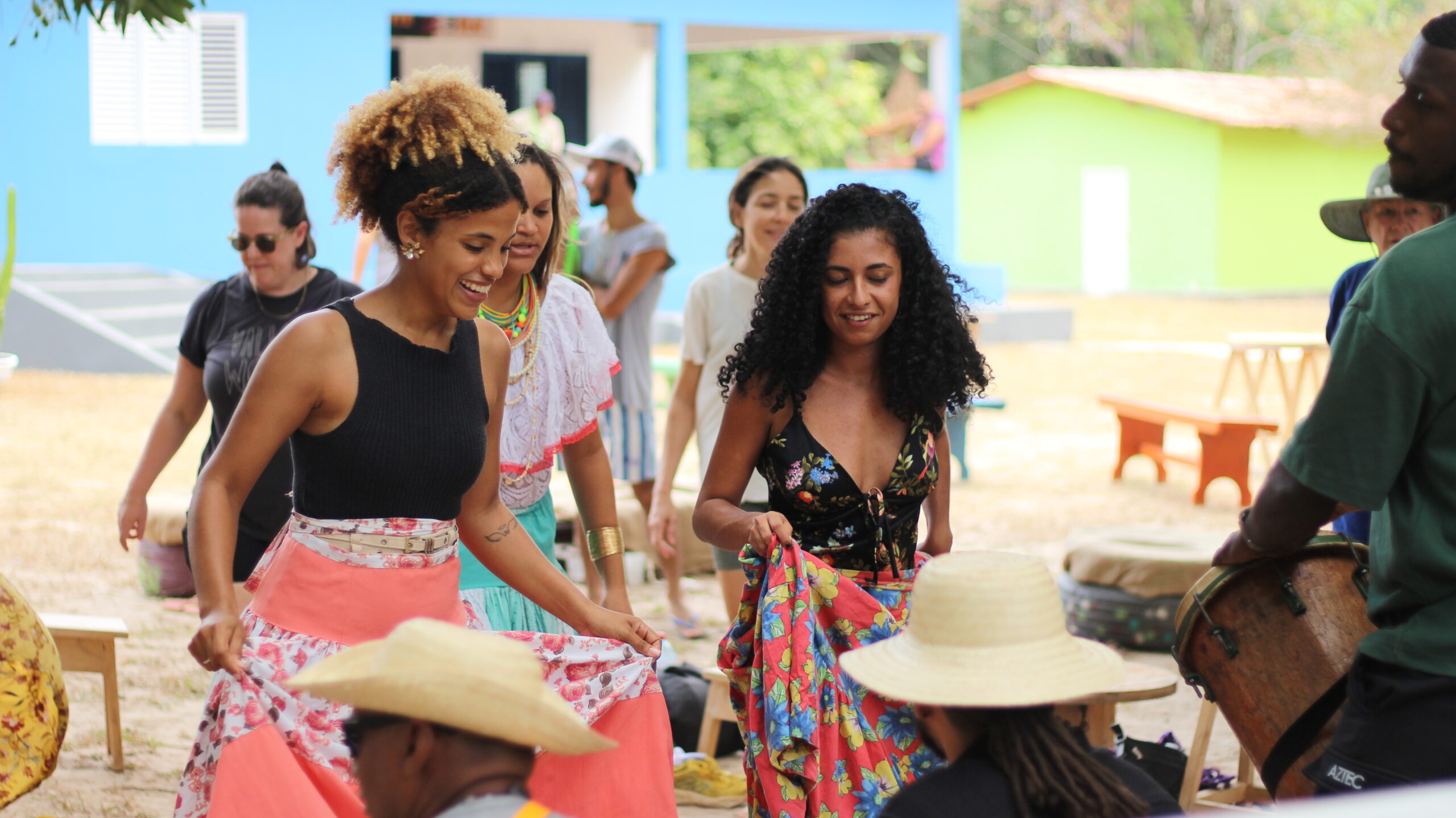
At the most recent Cazumbada in October, nine fellows from Latin America and the Caribbean, Southern Africa and the United States, as well as members of WKKF’s GFN team, joined local Quilombo communities — rural areas comprised of descendants of enslaved Africans and Indigenous people — to witness how knowledge is exchanged in community settings, among everyday people. The gathering was organized by Maria Regina Martins Cabral, a GFN fellow and director of the Instituto Formação, who has been working in the region since 2009.

The experience highlighted the power of educational territories — spaces beyond classrooms, where popular knowledge, agroecology, climate justice and community care converge to challenge conventional development models. Cazumbada is not your traditional conference. Fellows witnessed firsthand how local philanthropy supports autonomy, amplifies ancestral knowledge and strengthens grassroots initiatives. The event featured workshops that showcased the economic drivers of cuisine, handmade crafts, and culture as well as meetings with local leaders and organizations. True development, they learned, emerges from the ground up — from people, communities and their courage to imagine life differently.
“I was amazed by the collective action and the warmth of the people who live and work in these communities. I left strengthened, more hopeful and inspired to bring these learnings back to my work.”
– Guadalupe Tzopitl
The fellows’ journey began in the Quilombola Curral da Igreja Community, a community that maintains strong social cohesion through shared land stewardship, subsistence agriculture, and cultural traditions centered on ancestry, collective labor and regional Afro-Indigenous practices. There, fellows connected with the land and waters that sustain the community during a restorative river visit. This initial encounter grounded their learning in physical presence, reflection and care for the territory.
At the Quilombola Cajueiro Community, they were welcomed with warmth, ancestral wisdom and living history. Cajueiro is a place of resistance — thwarting ongoing threats to its territory from private ports and agribusiness, which impact their environment and traditional way of life, highlighting ongoing struggles for land rights despite constitutional recognition.
Each conversation opened a window into the resistance, resilience and strength of the Quilombola people, offering fellows a profound glimpse into how community‑driven solutions take shape.
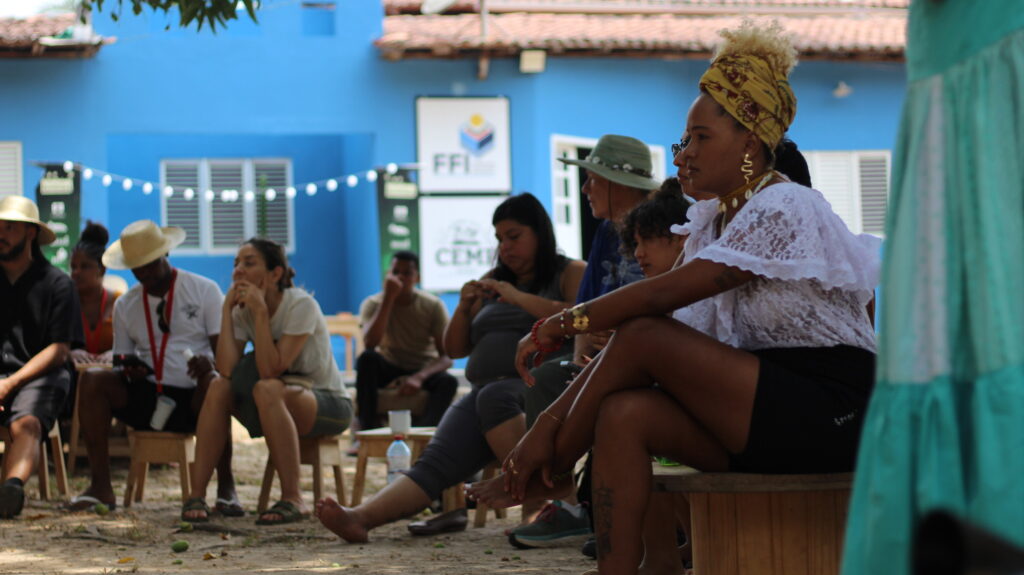
The group finally moved to the Buritirana Agroecological Park in Peri Mirim/MA, an environmental protection area of approximately 600 hectares (1482 acres), a living laboratory of agroecology and sustainable practices. Fellows undertook a 6 km walk through the Amazon rainforest within the private reserve, experiencing firsthand the forests, rivers and biodiversity that shape the community’s practices.
“For me, these days of shared learning with open hearts were a great joy.”
– Regina Cabral, President of Instituto Formação
Throughout Cazumbada, workshops allowed fellows to engage directly with local knowledge and cultural practices — from making palm fans to preparing yuca pastries and exploring Sankofa rituals that honor African heritage in the Baixada. Participants delved into deep and intentional conversations, bridging language barriers and fostering meaningful exchanges.
“Reflecting on the journey, I’m truly so thankful for this experience. Everywhere we traveled was incredibly beautiful, and the energy from everyone was amazing.”
– Devon Wilson
Cazumbada 2025 reminded all participants that real transformation comes from connecting, listening and co‑creating, and that supporting local communities is not charity. It is an investment in autonomy, justice and resilience. Fellows departed with renewed energy, broader perspectives and strengthened networks, ready to carry the lessons of the Baixada back to their own communities.
Learn more about Cazumbada.